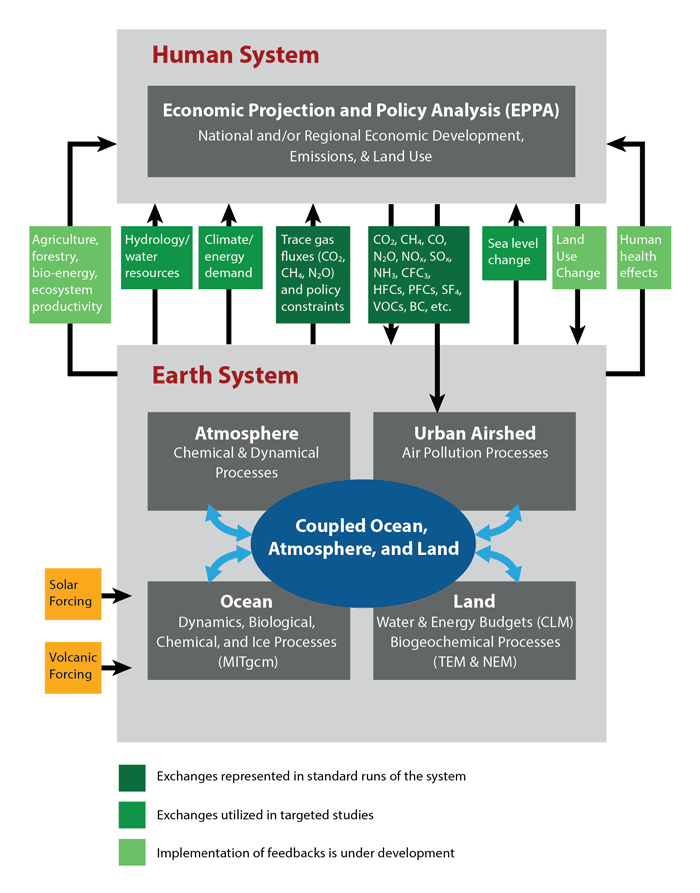
At the heart of the Joint Program's work lies the MIT Integrated Global System Modeling (IGSM) framework.
Designed to analyze interactions between humans and the Earth system, this comprehensive set of models is used to study the causes, consequences and solutions to problems that arise from global change. We define global change broadly and consider the unintended impacts of global economic and population growth on natural resource availability, the climate, and air and water quality.
Modeling the Interaction of Human and Earth Systems
The IGSM framework consists primarily of two interacting components—the Economic Projection and Policy Analysis (EPPA) model and the MIT Earth System model (MESM). The EPPA model simulates the evolution of economic, demographic, trade and technological processes involved in activities that affect the environment at multiple scales, from regional to global. The result of these anthropogenic activities in terms of greenhouse gas emissions, conventional air and water pollutants, and land-use/land-cover change are input into the MESM, which comprises coupled sub-models of physical, dynamical and chemical processes in the atmosphere, land and freshwater systems, ocean and cryosphere.
To learn how your organization can benefit from funding our research, please visit the Joint Program Sponsorship page.